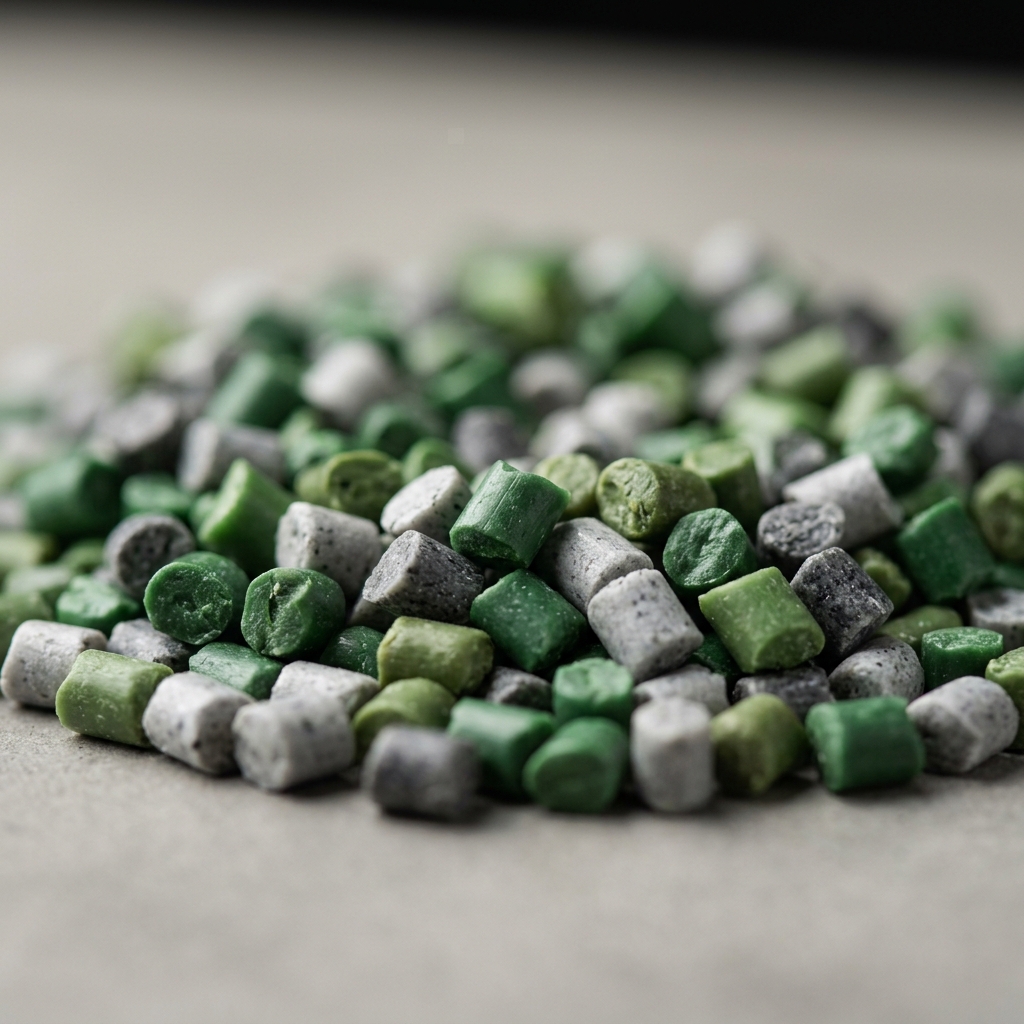

Quality consistency is the ultimate test of success in the reprocessed plastic granules industry. For plastic manufacturers to confidently switch from virgin polymers to recycled raw materials, they require material that behaves predictably under heat and pressure.
What Is Melt Flow Index (MFI)?
Melt Flow Index (MFI) is a laboratory measure of how easily a molten polymer flows under a specific load at a designated temperature. It is inversely proportional to the polymer’s molecular weight and viscosity.
Why MFI is Critical in Recycled HDPE
Post-industrial waste like HDPE blue drums, containers, and jerry cans are originally produced using different manufacturing techniques (e.g., blow molding vs. injection molding). Without rigorous segregation and quality testing:
- Machine Malfunctions: Inconsistent flow rates can clog extrusion dies or cause uneven barrel pressures in molding machines.
- Structural Defects: Products molded with incorrect MFI resins are prone to cracking, wall thinning, and structural failure.
- Varying Performance: Manufacturers face high rejection rates and production downtime if MFI parameters shift from batch to batch.
Rigorous Quality Control at Forge Renewables
At Forge Renewables, we ensure that every batch of our granules is MFI tested. By keeping close chemical controls, meticulous process parameters, and carrying out post-extrusion viscosity testing, we supply reprocessed granules that match exact Melt Flow Index requirements for rigid packaging companies.